
Void / Black (CCTV)
A patient that appears normal through the window or photo may show as a pure black void on CCTV. This is the CCTV layer catching what other layers miss.
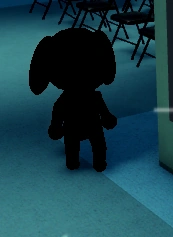
Quick Answer
Solid black silhouette on CCTV, no features visible on camera despite being visible at window, void-like shape on feed.
Trust the CCTV. If the feed shows a void/black figure, reject regardless of other layers.
What Void / Black (CCTV) actually is
Void / Black is a camera-layer anomaly in which the patient appears on the feed as a solid black silhouette with no identifiable features, even though the patient is visible and normal-looking at the window. It is an A-tier entry because the evidence is extreme rather than subtle, and the correct response is to trust the feed without qualification.
When it shows up
It appears on ordinary arrivals. The recorded handling is the most absolute on the list: trust the CCTV, and if the feed shows a void or black figure, reject regardless of what the other layers say.
Which layer catches it
The CCTV feed, with no cross-check required. This is the one entry where the recorded guidance removes your discretion, because the whole point is that the other layers will look normal and tempt you to explain the feed away.
How Void / Black (CCTV) reads in each layer
| Detection layer | What you see |
|---|---|
| Window | Visible and normal by design. The discrepancy between a normal window view and a black feed is the anomaly, so the window is evidence against treating this as a rendering fault. |
| Clipboard photo | Typically normal, and explicitly not grounds to overrule the feed. A clean photo is compatible with a void on camera. |
| CCTV | The primary and deciding layer. A solid black silhouette, no facial features, no visible limbs, a void-like shape. |
| Document | Not part of the recorded check. Do not wait for paperwork before acting on a void reading. |
Step-by-step: a real Void / Black (CCTV) encounter
- A patient arrives and the window view is completely normal.
- You check the camera before admitting, as routine.
- The feed shows a solid black figure occupying the patient’s position, with no face, no limbs, and no visible detail.
- You do not check whether the camera is broken and you do not let the normal photo override the feed.
- You reject immediately, because a void on camera is decisive regardless of the other layers.
False positives
Normal things players reject by mistake while hunting this entry.
- Rejecting a dark-bodied patient that is standing in shadow or outside the camera’s light range.
- Rejecting a black-and-white patient such as Penguin because the feed lacks detail at low quality. A real penguin still shows a defined head, flippers, and the pale front of the body.
- Rejecting on a camera that is failing or has lost signal, which is a hardware problem rather than an anomaly.
- Trying to reconcile the feed with the window by deciding the camera is wrong.
Often confused with
Entries that share a tell with this one, and how to separate them.
- Frequently confused with Black Eyes, which is a visible patient with blacked-out eyes rather than a featureless silhouette.
- Frequently confused with Static Photo, which is a photo failure rather than a camera failure. Both failing together is a stronger signal than either alone.
- On a grey or dark baseline the low contrast between the patient and a poor feed makes this entry harder to call, which is why a real void reading is defined by the total absence of detail rather than by darkness.
What a wrong call costs
Admitting a void patient is among the worst single calls available, because the evidence was unambiguous and you talked yourself out of it. The recorded handling exists specifically to remove that judgement call: the feed outranks the window, the photo, and your instinct to find a mundane explanation.
Recorded appearance and response
Appearance: The patient appears as a solid black silhouette or void on the CCTV feed, even though it looks normal at the window.
Tell signs: Solid black silhouette on CCTV, no features visible on camera despite being visible at window, void-like shape on feed.
How to handle: Trust the CCTV. If the feed shows a void/black figure, reject regardless of other layers.
Last re-checked against the live game on September 16, 2026. Last verified 35 days ago — re-check pending.
Void / Black (CCTV) FAQ
The window view and the photo both look normal. Should I still reject?
Yes. The recorded guidance is to trust the CCTV: if the feed shows a void or black figure, reject regardless of the other layers. The normal window view is part of the anomaly, not evidence against it.
How do I tell a void from a dark camera image?
Detail. A dark image of a normal patient still shows a face, a body outline, and limbs once your eyes adjust to the light. A void reading is a featureless silhouette with none of those, which is the distinction.
Penguin is already black and white. Could I confuse them?
Require visible detail. A penguin shows a defined head, two flippers, and a pale front. A void shows none of that. If you cannot resolve any features at all, treat the reading as a void rather than as a dark penguin.
What if the camera itself is faulty?
A camera that has lost signal will usually fail to show the room at all. A void reading shows the room and the other patients normally while one figure is a black shape, which is a patient problem rather than a camera problem.
Related Guides
Other Security Camera Check anomalies
Mismatching Face · A
Face shape, eyes, mouth, or other facial details change between the window and the CCTV feed.
Black Eyes · B
Black bar across the head, realistic black eyes, or direct staring from the patient on the CCTV feed.
Unnatural Body · B
Elongated limbs on CCTV, extra appendages visible, body proportions don't match any normal patient.
Staring at Cameras · C
Unbroken eye contact with the camera, direct gaze while walking, or head movement that keeps the camera in view.
Camera Twitching · C
Jerky CCTV movement, flickering around the patient, or motion artifacts that are absent at the window.
Mismatching Ears · C
Different ear or horn shape, length, color, or count when comparing the window with the camera feed.