
Black Eyes
Black Eyes is a camera-layer anomaly. The patient can appear normal at the window and in the photo while the camera reveals the black-eye form.
Quick Answer
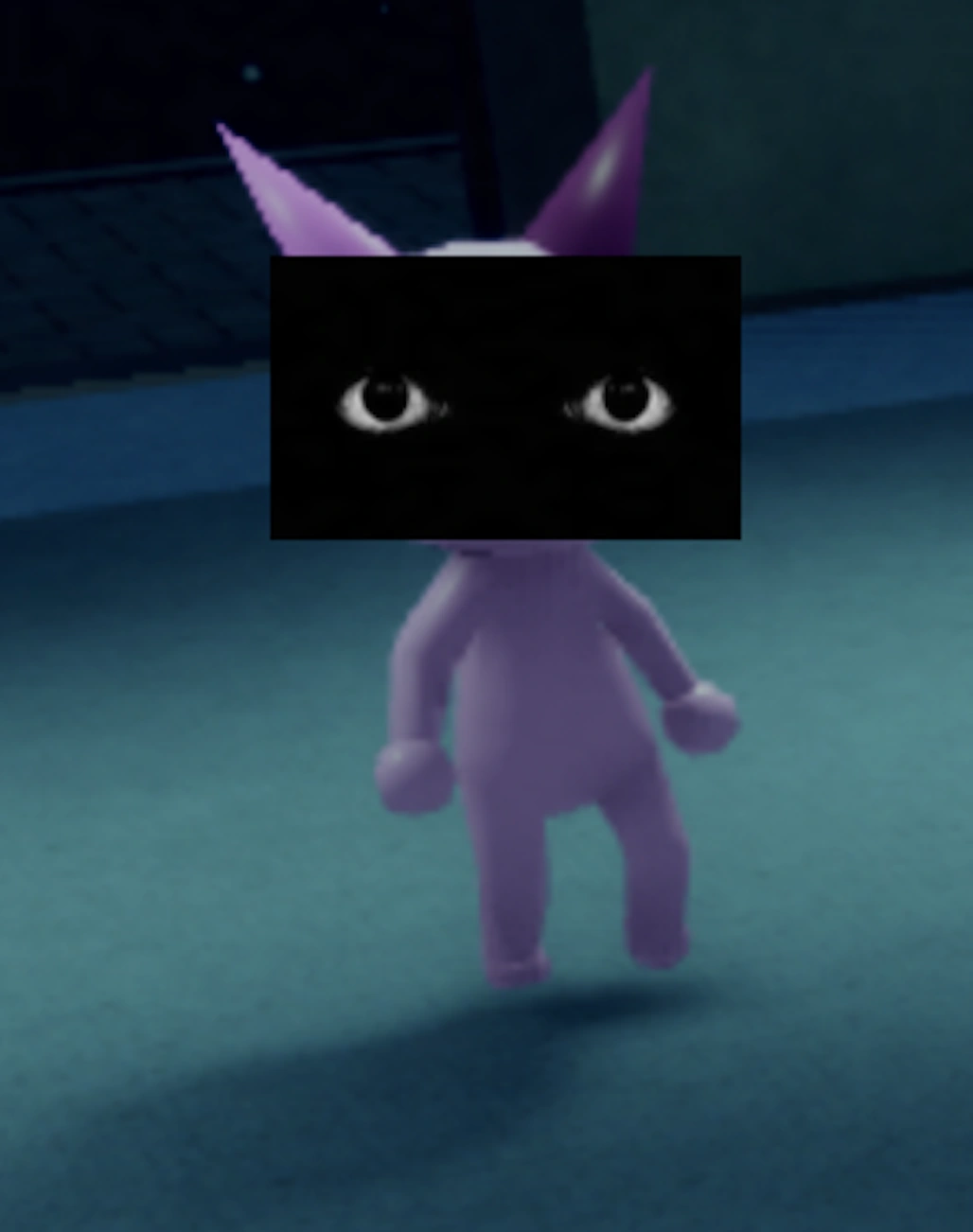
Black bar across the head, realistic black eyes, or direct staring from the patient on the CCTV feed.
Check the security cameras before treatment and reject when the Black Eyes form appears.
What Black Eyes actually is
Black Eyes is a camera-layer anomaly in which the patient’s eyes appear blackened on the CCTV feed, sometimes with a black bar across the head, and sometimes with the patient staring directly at the camera. The window view can be entirely normal, which is what makes it a camera entry rather than a visual one.
When it shows up
It appears on ordinary arrivals and reveals itself only on the cameras. Because the anomaly is confined to the feed, it is one of the entries most dependent on the player having unlocked and routinely using the CCTV system.
Which layer catches it
The CCTV feed. The recorded handling is to check the security cameras before treatment and reject when the Black Eyes form appears. It is a pre-treatment check, not a post-admission investigation.
How Black Eyes reads in each layer
| Detection layer | What you see |
|---|---|
| Window | Often normal, which is the point. Do not treat a clean window view as clearing the patient on a camera-layer entry. |
| Clipboard photo | Supporting evidence. The photo may or may not show the blackened eyes; a clean photo does not clear the patient. |
| CCTV | The primary layer. Look for blacked-out eyes, a black bar across the head, or the patient staring straight at the camera. |
| Document | Not part of the recorded check for this entry. |
Step-by-step: a real Black Eyes encounter
- A patient arrives and the window view matches its baseline, including the eyes.
- Before treating, you pull up the security camera covering the room or corridor.
- On the feed the eyes are blacked out, with a dark bar running across the head.
- You compare against the window once more to confirm the difference is in the feed rather than in the lighting.
- You reject before treatment, as the recorded guidance requires.
False positives
Normal things players reject by mistake while hunting this entry.
- Rejecting a patient whose eyes simply read dark on a low-quality or poorly lit feed.
- Rejecting a patient that happens to be facing the camera, when the actual tell is the blackened eyes or the black bar.
- Clearing the patient because the eyes looked normal at the window, which is where this entry is designed to be invisible.
- Confusing it with Staring at Cameras, where the eyes are normal but the gaze is locked to the camera.
Often confused with
Entries that share a tell with this one, and how to separate them.
- Frequently confused with Void / Black, which is a whole-body black silhouette on camera rather than blacked-out eyes on a visible patient.
- Frequently confused with Staring at Cameras; the separation is that here the eyes themselves are blackened, while that entry is defined by the direction of the gaze.
- On a white baseline such as White Cat the blackened eyes reach maximum contrast, which makes this the easiest patient to learn the check on and the most frequently imitated entry on that baseline.
What a wrong call costs
Because the window view is clean, a player who does not use the cameras will treat this patient confidently and never see the evidence. The cost is a failed arrival plus, more importantly, a systematic blind spot: the same omission that misses Black Eyes also misses every other camera-layer entry.
Recorded appearance and response
Appearance: The patient's head is obstructed by a black bar and realistic black eyes stare from the CCTV feed.
Tell signs: Black bar across the head, realistic black eyes, or direct staring from the patient on the CCTV feed.
How to handle: Check the security cameras before treatment and reject when the Black Eyes form appears.
Last re-checked against the live game on September 16, 2026. Last verified 35 days ago — re-check pending.
Black Eyes FAQ
Why does Black Eyes not show at the window?
It is categorised as a camera-layer anomaly, so the tell is confined to the CCTV feed. The recorded handling is to check the security cameras before treatment, because the window view alone will not reveal it.
How is Black Eyes different from Void / Black?
Scope. Void / Black is a solid black silhouette where the whole patient has no visible features on camera, while Black Eyes is a visible patient whose eyes are blackened, sometimes with a black bar across the head.
How is it different from Staring at Cameras?
The tell. Staring at Cameras is defined by the patient keeping the camera in view, with normal eyes. Black Eyes is defined by the eyes themselves going black.
Which patient makes this easiest to spot?
White Cat, because white fur gives black features the highest possible contrast. It is also one of the baselines most frequently imitated, so the check is worth drilling there first.
Related Guides
Other Security Camera Check anomalies
Mismatching Face · A
Face shape, eyes, mouth, or other facial details change between the window and the CCTV feed.
Unnatural Body · B
Elongated limbs on CCTV, extra appendages visible, body proportions don't match any normal patient.
Staring at Cameras · C
Unbroken eye contact with the camera, direct gaze while walking, or head movement that keeps the camera in view.
Void / Black (CCTV) · A
Solid black silhouette on CCTV, no features visible on camera despite being visible at window, void-like shape on feed.
Camera Twitching · C
Jerky CCTV movement, flickering around the patient, or motion artifacts that are absent at the window.
Mismatching Ears · C
Different ear or horn shape, length, color, or count when comparing the window with the camera feed.