
Mismatching Face
Mismatching Face is a camera-layer anomaly. The difference may only appear on the first camera view and can be difficult to read through a blurry feed.
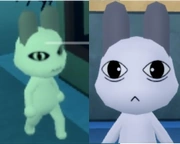
Quick Answer
Face shape, eyes, mouth, or other facial details change between the window and the CCTV feed.
Use a clear camera angle, preferably a Deployable Camera near the office, to confirm the mismatch before rejecting.
What Mismatching Face actually is
Mismatching Face is a camera-layer anomaly in which the patient’s face changes between the window view and the CCTV feed. The shape of the face, the eyes, or the mouth differ between the two views, meaning no single view is wrong — the inconsistency between them is the anomaly.
When it shows up
It appears on ordinary arrivals, and it is specifically a CCTV entry, so it only exists once the cameras are unlocked and you look at them. Before that point the anomaly is invisible by definition.
Which layer catches it
The CCTV feed against the window view. The recorded handling names the method: use a clear camera angle, preferably a Deployable Camera near the office, to confirm the mismatch before rejecting.
How Mismatching Face reads in each layer
| Detection layer | What you see |
|---|---|
| Window | The reference view. Note the face here so you have something to compare against. |
| Clipboard photo | Supporting evidence. A photo match does not clear the patient, because the anomaly can exist purely between the window and the feed. |
| CCTV | The primary layer. Compare face shape, eye placement, and mouth between the feed and the window. The mismatch is the tell. |
| Document | Not part of the recorded check for this entry. |
Step-by-step: a real Mismatching Face encounter
- A patient arrives and the face matches its baseline at the window.
- You note the eye spacing and mouth shape before moving on.
- You pull up the camera feed, using a clear angle rather than a partial view.
- On the feed the mouth shape and eye placement differ from what you recorded at the window.
- You confirm the mismatch is not a framing artefact, then reject. A matching clipboard photo does not change the call.
False positives
Normal things players reject by mistake while hunting this entry.
- Rejecting on a poor camera angle or a partially occluded view, which produces an apparent mismatch that is really a framing problem.
- Rejecting a patient whose face is genuinely hard to read because of distance or lighting.
- Judging the face as a whole instead of feature by feature, which allows a subtle change in eye placement or mouth shape to pass.
- Treating a matching clipboard photo as proof the patient is clean.
Often confused with
Entries that share a tell with this one, and how to separate them.
- Frequently confused with Incorrect Photo, which compares the photo to the patient rather than the camera to the window. The layers differ even though both involve a mismatch.
- Shares the face-comparison method with Mismatching Ears, which compares ear geometry across the same two views.
- Because the window view alone can look normal, this entry passes any check that does not use the cameras.
What a wrong call costs
The cost is a wrong call produced by incomplete evidence, since neither the window nor the feed is individually wrong. Players who do not use the cameras consistently lose this whole class of anomaly, and the failure is invisible in review because both individual views looked fine.
Recorded appearance and response
Appearance: The patient has a different face on the security camera than at the check-in window.
Tell signs: Face shape, eyes, mouth, or other facial details change between the window and the CCTV feed.
How to handle: Use a clear camera angle, preferably a Deployable Camera near the office, to confirm the mismatch before rejecting.
Last re-checked against the live game on September 16, 2026. Last verified 35 days ago — re-check pending.
Mismatching Face FAQ
Which is the real face, the window or the camera?
Neither is described as the wrong one. The anomaly is the inconsistency, so the correct response is to reject on the mismatch rather than to decide which view is truthful.
Do I need a Deployable Camera?
The recorded guidance prefers a clear camera angle, and specifically mentions a Deployable Camera near the office. A partial or badly angled view can create a false mismatch, so view quality matters for this entry more than for most.
Does a matching clipboard photo clear the patient?
No. This is a camera-layer entry, so the anomaly can exist solely between the window and the feed. A photo that matches the window does not rule out a mismatch on camera.
What if the camera view is partly blocked?
Fix the angle before deciding. A blocked or distant view of the face produces apparent mismatches that are framing artefacts, which is the main false positive on this entry.
Related Guides
Other Security Camera Check anomalies
Black Eyes · B
Black bar across the head, realistic black eyes, or direct staring from the patient on the CCTV feed.
Unnatural Body · B
Elongated limbs on CCTV, extra appendages visible, body proportions don't match any normal patient.
Staring at Cameras · C
Unbroken eye contact with the camera, direct gaze while walking, or head movement that keeps the camera in view.
Void / Black (CCTV) · A
Solid black silhouette on CCTV, no features visible on camera despite being visible at window, void-like shape on feed.
Camera Twitching · C
Jerky CCTV movement, flickering around the patient, or motion artifacts that are absent at the window.
Mismatching Ears · C
Different ear or horn shape, length, color, or count when comparing the window with the camera feed.