
Mismatching Ears
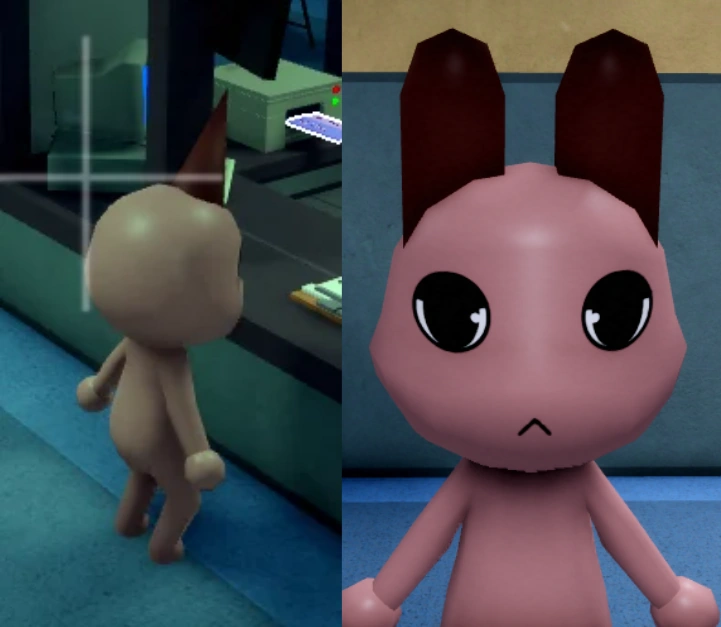
Mismatching Ears is a camera-layer anomaly. The ear shape, length, or type changes between the window view and the CCTV feed.
Quick Answer
Different ear or horn shape, length, color, or count when comparing the window with the camera feed.
Compare the CCTV view with the patient's visible model and reject when the ears or horns do not match.
What Mismatching Ears actually is
Mismatching Ears is a camera-layer anomaly in which the patient’s ears or horns change between the window view and the CCTV feed: a different shape, length, colour, or count. It is a C-tier entry, but it is the most general-purpose camera check in the game because every animal baseline has ears to compare.
When it shows up
It appears on ordinary arrivals and requires cross-view comparison. Its practical value is as a habit: ear geometry is a discrete, countable feature, so checking it consistently catches a family of camera-layer problems rather than only this one entry.
Which layer catches it
The CCTV feed compared against the patient’s visible model at the window, with the clipboard photo as a third reference. The recorded handling is to compare the CCTV view with the patient’s visible model and reject when the ears or horns do not match.
How Mismatching Ears reads in each layer
| Detection layer | What you see |
|---|---|
| Window | The reference view. Note ear length and angle here before you look at the feed. |
| Clipboard photo | A useful third reference, since ears are clearly framed in a photo and do not change with expression. Still not decisive on its own. |
| CCTV | The primary layer. Compare ear or horn shape, length, colour, and count against what you saw at the window. |
| Document | Not part of the recorded check for this entry. |
Step-by-step: a real Mismatching Ears encounter
- A patient arrives and you note the ear length and angle at the window.
- You open the clipboard photo, which shows a consistent ear shape.
- You pull up the camera. On the feed one ear is longer, and the angle is different from both previous references.
- You confirm the ear is not simply out of frame or occluded by furniture.
- You reject on the mismatch between the two views rather than on the ear looking wrong in isolation.
False positives
Normal things players reject by mistake while hunting this entry.
- Judging a rabbit or dog by whether it has floppy ears rather than comparing length and angle, which is how most mistimings happen.
- Reading a partially occluded or distant camera view as a mismatch when the ear is simply out of frame.
- Comparing across species. Ear geometry is only meaningful against the same baseline.
- Rejecting a patient for a single ear that moved between the two observations, since ears animate.
Often confused with
Entries that share a tell with this one, and how to separate them.
- Frequently confused with Incorrect Photo, which compares the photo to the patient rather than the camera to the window. Both can present as a wrong ear, in different layers.
- Shares the ear tell with the Brown Dog baseline, whose record warns specifically that imitators get the ear shape wrong — the same feature, checked across two layers.
- On penguins and frogs the equivalent check is flipper or proportion geometry, which is why this entry generalises into a broader proportion habit.
What a wrong call costs
The direct cost is low, because it is a C-tier entry with a simple rejection. The indirect benefit of the check is the real point: ear geometry is the cheapest camera-layer verification available, and a player who performs it habitually catches Mismatching Face and Unnatural Body at almost no extra cost.
Recorded appearance and response
Appearance: The patient's ears or horns look different on the security camera than they do at the check-in window.
Tell signs: Different ear or horn shape, length, color, or count when comparing the window with the camera feed.
How to handle: Compare the CCTV view with the patient's visible model and reject when the ears or horns do not match.
Last re-checked against the live game on September 16, 2026. Last verified 35 days ago — re-check pending.
Mismatching Ears FAQ
Is Mismatching Ears dangerous on its own?
It is a C-tier entry, so the direct risk is low and the response is a routine rejection. Its value is as a habit: ear geometry is the fastest camera-layer comparison available and it catches a broader family of camera anomalies.
What exactly do I compare?
Shape, length, colour, and count, between the window and the camera feed. The recorded handling is to reject when the ears or horns do not match across those views.
How do I avoid false rejections on rabbits and dogs?
Compare length and angle rather than checking for the presence of floppy ears. Blue Rabbit and Brown Dog both legitimately have ears that hang, so the tell is a change in the geometry, not the ear type.
What about patients without ears?
The equivalent check is proportion geometry: flippers on Penguin, proportions on Frog, and limb count in general. The habit transfers even when the specific feature does not.
Related Guides
Other Security Camera Check anomalies
Mismatching Face · A
Face shape, eyes, mouth, or other facial details change between the window and the CCTV feed.
Black Eyes · B
Black bar across the head, realistic black eyes, or direct staring from the patient on the CCTV feed.
Unnatural Body · B
Elongated limbs on CCTV, extra appendages visible, body proportions don't match any normal patient.
Staring at Cameras · C
Unbroken eye contact with the camera, direct gaze while walking, or head movement that keeps the camera in view.
Void / Black (CCTV) · A
Solid black silhouette on CCTV, no features visible on camera despite being visible at window, void-like shape on feed.
Camera Twitching · C
Jerky CCTV movement, flickering around the patient, or motion artifacts that are absent at the window.