
Unnatural Body
The CCTV layer reveals what the visual and photo check might miss. Unnatural body proportions visible on camera — limbs too long, extra limbs, or body shape that doesn't match any normal patient.
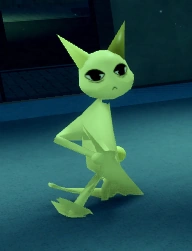
Quick Answer
Elongated limbs on CCTV, extra appendages visible, body proportions don't match any normal patient.
Check CCTV before admitting. Unnatural body on camera = reject.
What Unnatural Body actually is
Unnatural Body is a camera-layer anomaly in which the patient’s body proportions are wrong on the CCTV feed: elongated limbs, extra appendages, or a build that does not match any normal patient. The window view can look normal, so the anomaly is a mismatch between what the room shows and what the camera shows.
When it shows up
It appears on ordinary arrivals and only becomes visible once you check the cameras. Because limb count and body length are things players rarely verify deliberately — most identification focuses on the face — this entry exploits an unchecked assumption rather than a hard-to-see detail.
Which layer catches it
The CCTV feed, judged on limb count and proportion. The recorded handling is unambiguous: check CCTV before admitting, and an unnatural body on camera means reject.
How Unnatural Body reads in each layer
| Detection layer | What you see |
|---|---|
| Window | Often normal or nearly normal. A patient standing behind furniture or at an angle can hide limb problems entirely, so the window is a weak layer for this entry. |
| Clipboard photo | Can show the wrong proportions if the photo captured them, but the photo is framed on the face and upper body and often excludes the limbs. |
| CCTV | The primary layer. Count limbs and compare body length against the baseline for that species. This is the layer that shows the full body. |
| Document | Not part of the recorded check for this entry. |
Step-by-step: a real Unnatural Body encounter
- A patient arrives and the face, colour, and species all match the baseline.
- You pull up the camera and deliberately count the limbs rather than confirming that the patient looks broadly right.
- The camera shows four limbs where the model should have four, but one is visibly elongated and out of proportion.
- You compare against the correct species baseline rather than against a different species in the ward.
- You reject before admitting, as the recorded handling requires.
False positives
Normal things players reject by mistake while hunting this entry.
- Reading a crutch or a bandaged limb as an extra appendage, which is a real risk on Blue Rabbit and Brown Dog.
- Rejecting a penguin for having flippers rather than limbs, since the penguin model legitimately has no cat-style forelimbs.
- Judging a patient against the wrong species baseline. A dog is longer-bodied than a cat or rabbit, so comparing across species creates false mismatches.
- Rejecting on a partially occluded or distant camera view where limbs are partly hidden.
Often confused with
Entries that share a tell with this one, and how to separate them.
- Frequently confused with Mismatching Face, since both are camera-layer comparisons. The separation is that this entry is about the body while that one is about the face.
- Shares the hunched-posture tell with Hollow Face, which is why posture alone cannot decide either entry.
- On bandaged patients such as Green Cat the wrapping hides joints, which is exactly where elongated proportions are easiest to conceal, making this entry harder to clear on that baseline.
What a wrong call costs
The cost is a failed arrival from a check most players never perform. Because limb count and body length are not part of a typical identification routine, this entry tends to be missed consistently rather than occasionally, and the failure is not traceable to any single obvious error.
Recorded appearance and response
Appearance: On CCTV, the patient's body is distorted — elongated limbs, extra appendages, or wrong proportions.
Tell signs: Elongated limbs on CCTV, extra appendages visible, body proportions don't match any normal patient.
How to handle: Check CCTV before admitting. Unnatural body on camera = reject.
Last re-checked against the live game on September 16, 2026. Last verified 35 days ago — re-check pending.
Unnatural Body FAQ
What counts as an unnatural body?
Elongated limbs on CCTV, extra appendages, or body proportions that do not match any normal patient. The recorded handling is simple: check CCTV before admitting, and treat an unnatural body on camera as a rejection.
Why does the window not show it?
Because furniture, angle, and stance hide limbs. This is a camera-layer entry, so the feed shows the full body from a fixed angle in a way a doorway view does not.
How do I avoid rejecting Blue Rabbit or Brown Dog by mistake?
Account for accessories and injuries. Blue Rabbit carries a crutch and Brown Dog can have a bandaged paw, and wrapping on Green Cat hides joints entirely. Judge limb count against the model, not against the silhouette including props.
Should I compare against the same species?
Always. A dog model is longer-bodied than a cat or rabbit, and a penguin has flippers rather than forelimbs. Cross-species comparison is a reliable way to generate false rejections on this entry.
Related Guides
Other Security Camera Check anomalies
Mismatching Face · A
Face shape, eyes, mouth, or other facial details change between the window and the CCTV feed.
Black Eyes · B
Black bar across the head, realistic black eyes, or direct staring from the patient on the CCTV feed.
Staring at Cameras · C
Unbroken eye contact with the camera, direct gaze while walking, or head movement that keeps the camera in view.
Void / Black (CCTV) · A
Solid black silhouette on CCTV, no features visible on camera despite being visible at window, void-like shape on feed.
Camera Twitching · C
Jerky CCTV movement, flickering around the patient, or motion artifacts that are absent at the window.
Mismatching Ears · C
Different ear or horn shape, length, color, or count when comparing the window with the camera feed.