
Tiny Anomaly
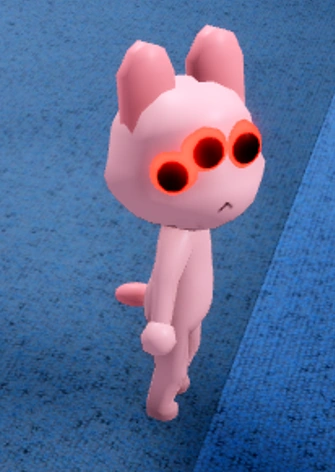
Tiny Anomaly becomes hostile after checking in and often also has Static Photo and Unnatural Body features. It can appear during the Ambulance Event.
Quick Answer
Unusually tiny body size, high-pitched voice, short-tailed pink bunny model, or multiple glowing red eyes.
Reject before checking in. Do not let the unusual size or voice distract you from the standard photo and CCTV checks.
What Tiny Anomaly actually is
Tiny Anomaly is a visual-layer anomaly that presents as a drastically shrunken patient, usually on a short-tailed pink bunny model, with a high-pitched voice and sometimes multiple glowing red eyes. It uses size and audio, which are the two things players scan for least because neither is part of a normal identification routine.
When it shows up
It appears as a standard arrival but is physically much smaller than the baseline, and the voice cue plays during the encounter. The audio tell is the unusual part: it exploits the fact that players are trained to inspect models visually and rarely treat a sound as evidence.
Which layer catches it
The window view, judged on scale. The complication is that one roster patient — Frog — is legitimately the smallest in the game, so size alone has a baseline that can be misread. The reliable combination here is unusual size together with the voice cue or multiple glowing red eyes.
How Tiny Anomaly reads in each layer
| Detection layer | What you see |
|---|---|
| Window | The primary layer. The patient is far smaller than any normal arrival of the same species, and the voice is high-pitched. |
| Clipboard photo | Can be misleading. A photo normalises scale, so an unusually small live patient can still produce a photo that looks unremarkable. Do not use the photo to overrule the size. |
| CCTV | Scale relationships are clearer on a feed because the camera shows the patient against the room rather than against the player’s point of view. |
| Document | No documented interaction. This entry is decided by size, voice, and eye count. |
Step-by-step: a real Tiny Anomaly encounter
- A small patient arrives, noticeably smaller than the usual model for that species.
- Instead of rejecting on size, you check whether it is Frog, the legitimate small baseline.
- It is not Frog, and the voice cue is high-pitched rather than matching a normal patient.
- You check the eyes and find more than two, with a red glow.
- You reject on the combination of size, voice, and eye count rather than on size alone.
False positives
Normal things players reject by mistake while hunting this entry.
- Rejecting Frog for being small. Frog is the smallest normal baseline in the roster, so size must be paired with the voice cue or extra glowing eyes before it means anything.
- Rejecting a penguin or small-cat patient for reading as compact on a low-quality feed, where scale is hard to judge.
- Ignoring the voice cue because it is audio rather than visual. On this entry the audio is one of the documented tells.
- Judging size from the clipboard photo, which does not preserve a useful scale reference.
Often confused with
Entries that share a tell with this one, and how to separate them.
- Frequently confused with Frog, the normal small baseline, which is why the recorded guidance is to pair size with the voice and eye-count tells.
- Shares the multiple-glowing-eyes tell with Three Eyes, though Tiny Anomaly combines it with size and audio instead of a clean eye count.
- Because it does not change the patient’s species or colour, every still-frame identification check passes and only scale and audio fail.
What a wrong call costs
This is a low-tier entry with a simple rejection response, so the direct cost is small. The real risk is that it conditions players to distrust size-based reasoning entirely, which then causes false rejections on Frog and on small patients rendered at a distance — a second-order cost that shows up as unexplained failed arrivals elsewhere.
Recorded appearance and response
Appearance: The patient appears extremely small and has a very high-pitched voice. A pink bunny with a short tail and three glowing red eyes is the known example.
Tell signs: Unusually tiny body size, high-pitched voice, short-tailed pink bunny model, or multiple glowing red eyes.
How to handle: Reject before checking in. Do not let the unusual size or voice distract you from the standard photo and CCTV checks.
Last re-checked against the live game on September 16, 2026. Last verified 35 days ago — re-check pending.
Tiny Anomaly FAQ
How do I avoid rejecting Frog by mistake?
Never decide on size alone. Frog is the smallest normal baseline on the roster, so treat size as one signal among three: unusual size, a high-pitched voice, and multiple glowing red eyes. The entry’s own guidance is not to let the size or voice distract you from the standard photo and CCTV checks.
Does the clipboard photo show this anomaly?
Not reliably. A still photo normalises scale, so a patient that is obviously tiny in the room can produce a photo that looks unremarkable. Use the window and the camera for the size judgement.
Is the voice cue real evidence?
Yes. The entry records a high-pitched voice as one of its tells, alongside the small body, the short-tailed pink bunny model, and the possibility of multiple glowing red eyes.
Is Tiny Anomaly a special threat?
No. It is a standard visual anomaly, and the correct response is a rejection. It does not escalate into an enemy encounter.
Related Guides
Other Appearance Check anomalies
Crooked Face · S
Crooked smile, sharp teeth, large mismatched eyes, or eyes positioned unusually high on the face.
Three Eyes · A
Three glowing red eyes, extra eye placement, or an eye count that does not match the patient's normal model.
Hollow Face · A
Dark hollow eyes, sunken facial features, twitching, and a hunched posture.
Smiling with Creepy Eyes · B
Large black-pupil eyes, heavy under-eye bags, and a fixed oversized smile that does not match the normal patient.
Twitching · C
Erratic jerking movements, unnatural head/limb twitches, movement pattern different from all normal patients.
Staring · B
Sustained direct eye contact, head rotation that follows the player, and a gaze that does not break normally.
X-rayed Face · B
Small wide circular eyes, black pupils, realistic teeth, or an X-rayed-looking face that appears only in one expression.