
Three Eyes
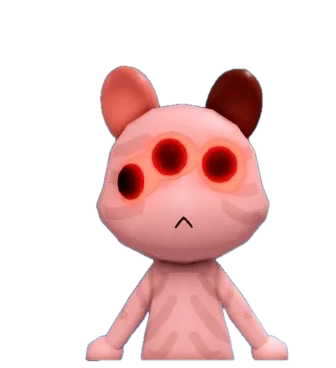
Three Eyes is a visual anomaly that can be easier to spot during ambulance events or when a patient is on fire, because the original eyes may show beneath the anomalous eyes.
Quick Answer
Three glowing red eyes, extra eye placement, or an eye count that does not match the patient's normal model.
Reject before treatment. Confirm the eye count at the window and do not rely on the photo alone.
What Three Eyes actually is
Three Eyes is a visual-layer anomaly that adds an extra eye to the patient model. The additional eye glows red and sits outside the normal facial layout, so the anomaly is defined by eye count rather than by any change to the face around it. Species, colour, and build are untouched.
When it shows up
It presents on standard arrivals in the same way a normal patient does, with no event cue. Because the change is an addition rather than a distortion, it is easy to miss when scanning for things that look wrong, and easy to catch when you are specifically counting.
Which layer catches it
The window view, by counting rather than inspecting. The tell is arithmetic: two eyes is normal, three is not. This makes the anomaly cheap to detect and cheap to miss, depending entirely on whether eye count is part of your routine.
How Three Eyes reads in each layer
| Detection layer | What you see |
|---|---|
| Window | The primary layer. The third eye is visible from outside the room. Count the eyes deliberately rather than waiting for a third one to stand out. |
| Clipboard photo | Documented as insufficient on its own. The photo should be checked, but the entry notes that the window count is the confirmation rather than the photo. |
| CCTV | The extra eye can be harder to resolve on a low-quality feed, especially on a small patient. Do not treat a clean camera view as clearing a patient whose eye count you have not confirmed. |
| Document | No documented interaction. This entry is resolved by counting. |
Step-by-step: a real Three Eyes encounter
- A patient arrives and the species and colour match the baseline.
- You look at the face and count the eyes instead of judging whether they look right.
- You count three. One of them glows red and sits outside the normal layout.
- You check the clipboard photo, which is not decisive on its own — you do not use it to overrule the count.
- You reject before treatment. The count was the whole check and it took seconds.
False positives
Normal things players reject by mistake while hunting this entry.
- Rejecting a patient because the eyes look unusual in size or spacing. Large eyes are normal on several baselines; only the count matters for this entry.
- Miscounting on a small or low-sitting patient such as Frog, whose eyes are close together and can read as merged from the wrong angle.
- Relying on the photo and skipping the count, which the entry explicitly warns against.
- Counting reflections or highlights as a third eye on a patient in a bright room.
Often confused with
Entries that share a tell with this one, and how to separate them.
- Frequently confused with Black Eyes, which also changes the appearance of the eyes but subtracts visibility rather than adding an eye.
- Shares its strongest check with Crooked Face, since both are confirmed at the window by examining the eyes rather than the face as a whole.
- Because it adds rather than alters, a patient can show three eyes and still match its baseline on colour, species, and build.
What a wrong call costs
Missing a third eye means treating a patient that should have been rejected. Unlike a distorted face, which at least looks wrong, an added eye produces a patient that feels normal in every other respect, so the wrong call tends to be made with confidence rather than in doubt. On a Journal run this forfeits the correct-rejection reward for the entry.
Recorded appearance and response
Appearance: Three slightly off-center glowing red eyes replace the patient's normal eyes; the original eyes may still be visible underneath.
Tell signs: Three glowing red eyes, extra eye placement, or an eye count that does not match the patient's normal model.
How to handle: Reject before treatment. Confirm the eye count at the window and do not rely on the photo alone.
Last re-checked against the live game on September 16, 2026. Last verified 35 days ago — re-check pending.
Three Eyes FAQ
How do I tell Three Eyes apart from a patient with unusual eyes?
Count. This entry is defined by an eye count that does not match the normal model, not by eye size, colour, or spacing. Several normal baselines are drawn with large or closely set eyes, so appearance is not a signal.
Is the clipboard photo enough to confirm Three Eyes?
No. The recorded guidance is to confirm the eye count at the window and not to rely on the photo alone. Treat the photo as supporting evidence rather than the deciding layer.
The patient is small and sits low. Can I still count reliably?
Change your angle before concluding anything. A small, low-sitting patient can have eyes merge visually from an oblique angle, so position yourself for a clear view if the count is ambiguous.
Is Three Eyes a special threat?
No. It is a standard visual anomaly. It is not a Mimic or a Skinwalker, so rejecting it ends the interaction rather than escalating it.
Related Guides
Other Appearance Check anomalies
Crooked Face · S
Crooked smile, sharp teeth, large mismatched eyes, or eyes positioned unusually high on the face.
Hollow Face · A
Dark hollow eyes, sunken facial features, twitching, and a hunched posture.
Smiling with Creepy Eyes · B
Large black-pupil eyes, heavy under-eye bags, and a fixed oversized smile that does not match the normal patient.
Twitching · C
Erratic jerking movements, unnatural head/limb twitches, movement pattern different from all normal patients.
Staring · B
Sustained direct eye contact, head rotation that follows the player, and a gaze that does not break normally.
Tiny Anomaly · C
Unusually tiny body size, high-pitched voice, short-tailed pink bunny model, or multiple glowing red eyes.
X-rayed Face · B
Small wide circular eyes, black pupils, realistic teeth, or an X-rayed-looking face that appears only in one expression.