
Static Photo
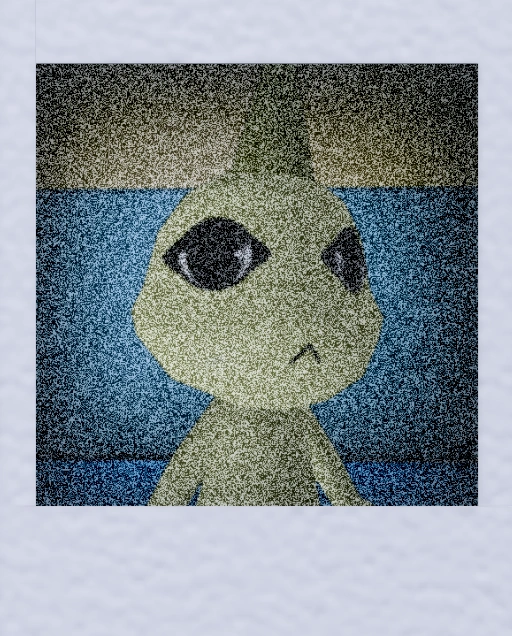
Instead of a patient photo, the camera result displays static or a grainy TV-snow effect. After Shift 10, static alone is not a reliable Mimic confirmation and needs the other checks.
Quick Answer
Photo replaced entirely by static/TV snow, blank or black photo frame, no identifiable patient image.
Close the shutters instead of tasing or shooting a patient based only on a static photo. Complete the other checks before deciding whether to treat.
What Static Photo actually is
Static Photo is a photo-layer anomaly in which the clipboard photo is replaced entirely: static or television snow, a blank frame, or a solid black frame with no identifiable patient image. Unlike Incorrect Photo, there is no wrong patient to compare — there is simply no image.
When it shows up
It appears on ordinary arrivals. Because the live patient is usually normal, the anomaly is easy to read as a rendering fault rather than as a signal, which is the failure mode: players dismiss the photo and clear the patient.
Which layer catches it
The clipboard photo. The recorded handling is specific and counterintuitive: close the shutters rather than tasing or shooting a patient on the basis of a static photo alone, and complete the other checks before deciding whether to treat.
How Static Photo reads in each layer
| Detection layer | What you see |
|---|---|
| Window | The patient typically looks normal, so the window can actively mislead here. It tells you what the patient looks like; it does not tell you what the photo was supposed to show. |
| Clipboard photo | The primary layer, and the anomaly itself. Static, snow, a blank frame, or a black frame with no identifiable patient. |
| CCTV | The deciding layer after the photo fails. The recorded guidance is to complete the other checks before acting, and the camera is the most informative of them. |
| Document | Worth reading as part of completing the remaining checks rather than acting on the photo alone. |
Step-by-step: a real Static Photo encounter
- A patient arrives and the live model looks entirely normal at the window.
- You open the clipboard and the photo is static rather than showing a patient.
- You do not tase or shoot the patient on the basis of the photo alone.
- You close the shutters and run the remaining checks, starting with the camera feed.
- You decide on the combined evidence rather than on the photo, and record the arrival as a photo-layer failure.
False positives
Normal things players reject by mistake while hunting this entry.
- Tasing or shooting a patient based only on a static photo, which is the specific mistake the entry warns against.
- Treating the photo as a rendering bug and clearing the patient without running the remaining checks.
- Confusing it with Incorrect Photo, where a patient is visible but does not match.
- Treating a genuinely dark photo of a dark patient as static without checking whether an image is present at low brightness.
Often confused with
Entries that share a tell with this one, and how to separate them.
- Frequently confused with Incorrect Photo. Static Photo shows no image; Incorrect Photo shows the wrong image. The responses differ, since this entry calls for the shutters and the other layers rather than a direct comparison.
- Overlaps with Void / Black on the CCTV layer, where a solid black shape is also the tell. A patient with both a black photo and a void camera reading is a much stronger signal than either alone.
- Because the live model is often normal, this entry passes every check that does not open the clipboard.
What a wrong call costs
The recorded mistake is acting on the photo alone — either tasing or shooting a patient because the photo was static, or clearing the patient because the photo was unreadable. Both are wrong for the same reason: the photo is a signal that something is wrong, not a description of what to do next.
Recorded appearance and response
Appearance: The clipboard photo shows only static/TV snow or a completely blank image.
Tell signs: Photo replaced entirely by static/TV snow, blank or black photo frame, no identifiable patient image.
How to handle: Close the shutters instead of tasing or shooting a patient based only on a static photo. Complete the other checks before deciding whether to treat.
Last re-checked against the live game on September 16, 2026. Last verified 35 days ago — re-check pending.
Static Photo FAQ
Should I tase a patient with a static photo?
No. The recorded guidance is explicitly the opposite: close the shutters instead of tasing or shooting a patient based only on a static photo, then complete the other checks before deciding whether to treat.
Is a static photo an anomaly or a bug?
Treat it as an anomaly. Static, snow, a blank frame, and a solid black photo frame are all recorded tells for this entry, so a photo you cannot read is a signal rather than a rendering fault to be dismissed.
What do I do after seeing a static photo?
Close the shutters and work the remaining layers, with the camera feed as the most informative. The photo told you something is wrong; it did not tell you what to do about it.
How is Static Photo different from Void / Black on CCTV?
Different layer. Static Photo is a failure of the clipboard image, while Void / Black is a solid black silhouette on the camera feed. They can appear together, and both failing is a stronger signal than either alone.